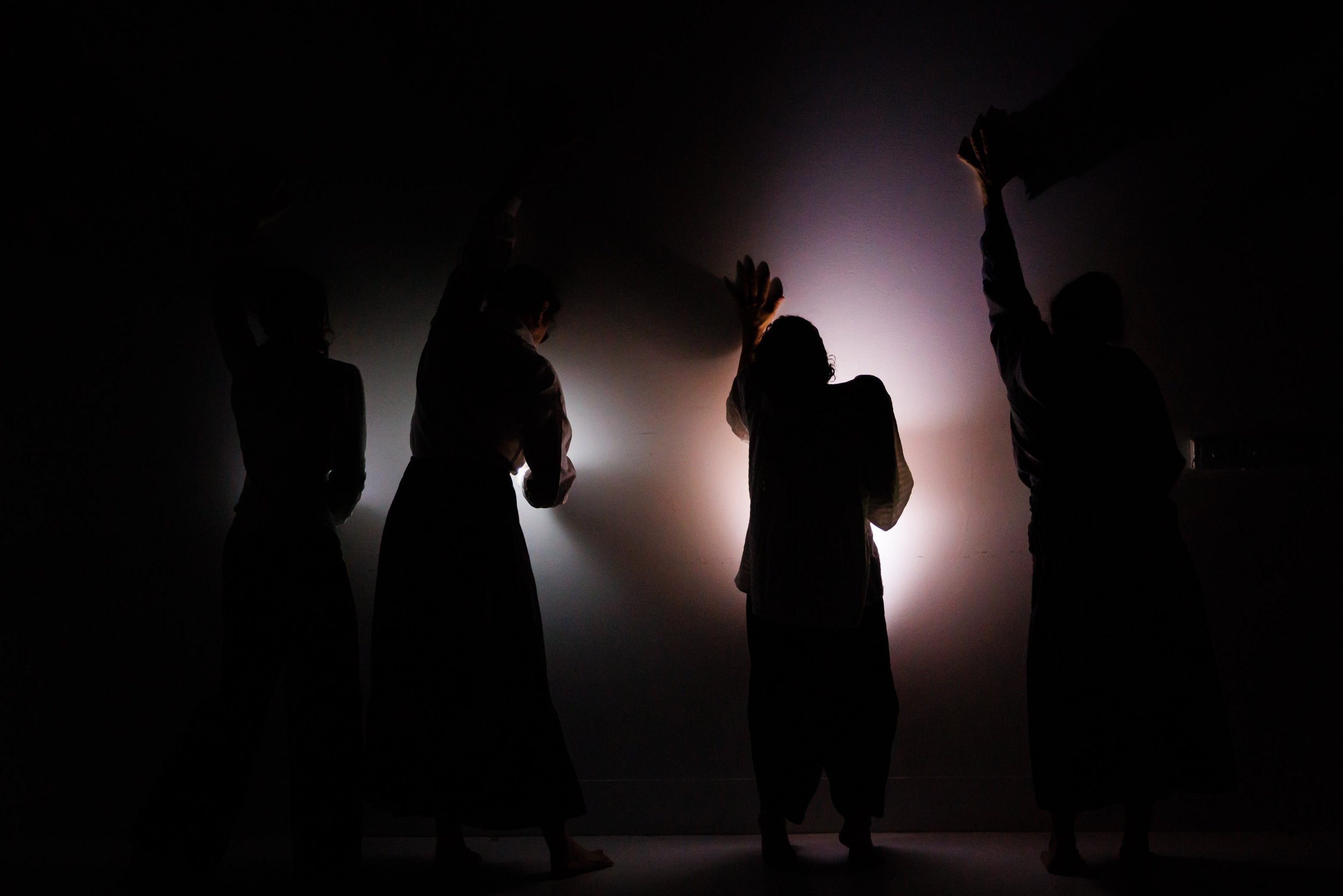
A community built from the ground up
It started with one person
Fine Lines was founded by Dr Katrina Rank, a professional ballet and contemporary dancer who trained in Vaganova and RAD methods, Graham and Cunningham styles and in improvisation. Teachers included Marilyn Rowe, Kelvin Coe, Gary Norman, Leigh Warren, Gayrie McSween, Ann Jenner, Garry Lester and Al Wunder. She worked professionally in Australia with The Dancers Company and Victorian State Opera and in the UK with Northern Ballet Theatre under the direction of Christopher Gable.
Katrina’s extensive teaching experience includes formal contexts (primary, secondary, tertiary education and vocational training) as well as community contexts with trained and untrained dancers across all ages, abilities, backgrounds, including those with physical, cognitive and mental health conditions.
In 2018 she was given a coveted Australian Dance Award for Services to Dance Education. She became one of Australia’s four Dance for Parkinson’s certified and accredited teachers in 2023 and continues to hold ongoing teaching registration with the Victorian Institute of Teaching. Her broad and detailed teaching experience, plus her love of teaching, has resulted in a highly nuanced teaching pedagogy that focuses on mature and elderly dancers, with particular reference to dancers who undertook dance training and professional work in their youth.
Small beginnings
Fine Lines Dance began in 2013 with an idea: unable to join fully in available dance classes, and missing the community of fellow dancers, Katrina Rank started a class that was challenging yet safe for older bodies.
Fine Lines was created to challenge stereotypes and assumptions about older dancers. At the time of its inception, there were no ongoing opportunities for older dancers that spoke to a serious dance practice. Fine Lines provided a place where mature artists could continue to grow artistically and creatively. Weekly classes led to showings and regular performance seasons, all produced by Rank herself, with some funding support from local government.
The classes began at Dancehouse, Carlton, often with only 3 or 4 people. It grew slowly in the first few years, then, in 2016, it ‘burst’ into a significantly large community of 50+ mature age dancers. This creative body includes print makers, graphic artists, designers, writers, musicians, choreographers and dancers with deep and sustained practices in the arts and those engaging in the performing arts for the first time.
Fine Lines continues to offer Friday and Tuesday contemporary classes, workshops, showings and performances. Other Fine Lines dancers have started their own classes, offering further opportunities for our community.
Building visibility
Fine Lines is interested in sustaining artistic and physical practice and making work that is provocative and conceptually clear.
We present work to raise awareness of the possibilities of movement at any age, to continue to grow as artists and to develop new skills.
We produce live and filmed performances that showcase older dancers as strong, talented, skillful and interesting.
And we aim to reach new audiences, to inspire others to follow their passion.
Fine Lines:
• sees a myriad of possibilities in each body
• connects with audiences and advocates for a changed perspective
• questions labels and assumptions
• is bold and uncompromising

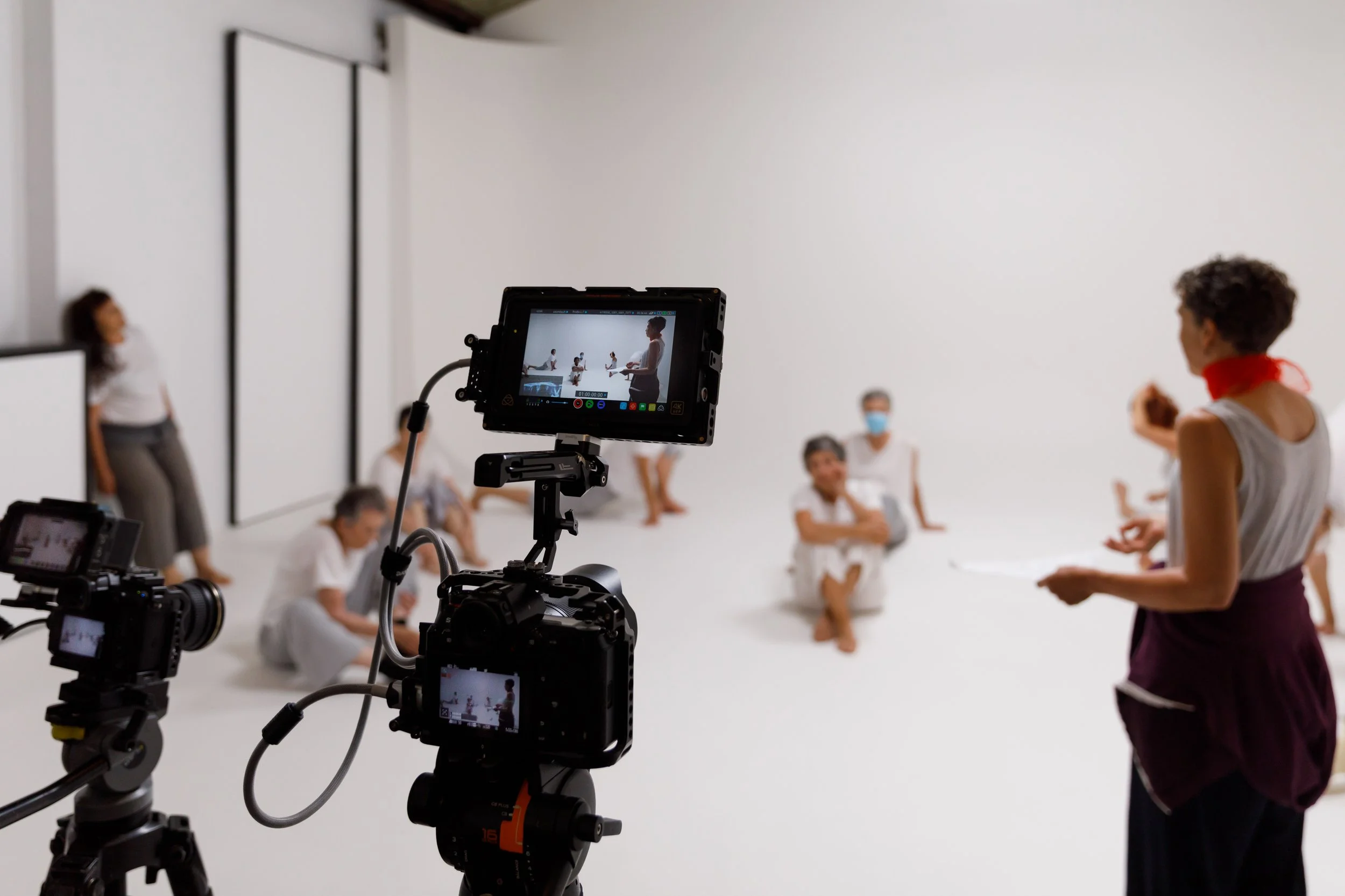
Images by Robert Wagner
Benefits of dance, what the research says
There is an emerging body of research regarding the benefits of dance activity for older people . The research offers a qualitative assessment of the health benefits, social inclusion, and community participation offered by dance activity.* Dancing involves the whole body, activating joints and muscle groups, improving balance, posture, coordination, control, flexibility and strength, increasing body and spatial awareness, playing an important role in falls prevention and neurological health. As a social activity, it provides an avenue for engaging with friends old and new, while learning and building new physical and artistic skills together.
Dance is well known to improve the mental health and well being of participants that dance together on a regular basis. Because the body is the instrument of the dance, it requires self care, agency and cooperation. It requires participant-dancers to value and appreciate their own bodies, minds and lived experience. Dancers who work in this way value the contribution of all dancers in the group and work together to support each other’s personal, creative and artistic growth and exploration. When dance is pursued as a creative and artistic art form, participants are challenged cognitively and creatively, contributing to feelings of self-worth, enthusiasm for life and pleasure.
see link below for a review of the research literature
Our dancers say…
“Dance movement feels the right sort of movement for me, as distinct from that of anything involving sport. And to work at a movement, work through it, feel pleased with its execution - that is truly rewarding. What a joy to make explorations with the body, to follow a private narrative, or of one according to instructions or suggestions. Thanks to the music given, pain can often, extraordinarily, be put on the back-burner.
Also, there is nothing like the challenge of performing - as we have discovered several times over the last few years.”
“I love to learn and I love dancing . I can dance in Fine Line because I do not feel self conscious about my age or my limitations as a dancer.”